Monday, October 26, 2015

Week#9 Midterm Reflections and Preparing for the Future


Midterm Thoughts & Question

Kahoot Challenge
Google Translate Challenge (pronunciation practice)


Sugata Mitra - SOLE (Self Organized Learning Environment)

Quoting Arthur C Clarke
  • Any teacher that can be replaced by a machine should be!
  • If children have interests then education happens.

Resources


The Flipped Classrooma form of blended learning which encompasses any use of technology to leverage the learning in a classroom, so a teacher can spend more time interacting with students instead of lecturing. This is most commonly being done using teacher-created videos that students view outside of class time.

 Let's use Video to Reinvent Education

More about Khan Analytics (starts at 1:10)
http://www.thegatesnotes.com/Topics/Education/Sal-Khan-Analytics-Khan-Academy

거꾸로교실 플립러닝 Flipped Learning KBS
PD Journal: 아이들이 즐거워지는 혁명, ‘거꾸로 교실’

Interview with Salman Khan
http://fora.tv/2011/05/03/Khan_Academys_Salman_Khan_The_Real_YouTube_Revolution#chapter_07

About Flipped Classroom
http://www.peterli.com/spm/resources/articles/archive.php?article_id=2604

The Flipped Classroom Project
http://www.flatclassroomproject.org/

Teachers "Doing The Flip" To Help Students Become Learnershttp://www.thedailyriff.com/articles/teachers-doing-the-flip-to-help-students-become-learners-531.php


The World is Flat by Thomas Friedman The title is a metaphor for viewing the world as a level playing field in terms of commerce, where all competitors have an equal opportunity.
http://en.wikipedia.org/wiki/The_world_is_flat

    Transcript Here


    Food for Thought: Changing Education Paradigms

    Transcript
    Other cool RSA Animate Videos
      Language as a Window into Human Nature
       The Power of Networks

      The Divided Brain
    and from other sources
    Visionsofstudents.org
    Rethinking Education


    Discussion Questions

    • What are your first reactions to the ideas discussed in the videos.
    • How could Flipped Classroom and SOLE concepts be effective in your current or likely future teaching environments?
    • What would be the benefits, challenges, and obstacles (for teachers, students, and the system)?
    • How do you think the role of the teacher will change in coming years? How can you be prepared for the future?

    Assignments:
    • Check out some of the resources on on this post and share your thoughts and reflections on a your own blog.
    • Take a look at some of  the Skills Guide on LearningCall.net.  Arrive to next week's class with questions, interests, and fully-charged phone batteries.

    Monday, October 12, 2015

    Midterm


    Midterm

    Answer the questions below in a total of at least 600 words.
    Email answers to pufslebow@gmail.com and/or post them on your blog by October 23.
    • Of the topics we've covered so far, which ones will be most applicable to your future language learning and  teaching? Why?
       
    • Choose one aspect of something we've covered in this course and describe in some detail how you would apply that to a future lesson?
       
    • Which topics or methods are you interested in learning more about during the second half of the certificate program? 

    Week#7 - Affective Issues in ELT


    Affective Issues in L2 Learning in the Classroom

    Videos

    Jessica affirmation


    Student-Teacher Relationships as Motivators v1
    https://www.youtube.com/watch?v=0YyPd_KAdQY


    The surprising secret to speaking with confidence
    https://www.youtube.com/watch?v=a2MR5XbJtXU

    Discussion, Part#1

    • What was the most stressful class you’ve ever taken? Why?
    • What learning situations have caused you the most anxiety?
    • Think back to past teachers and courses.  Which ones helped you have a ‘I can do it!’ attitude?
      Which ones did the opposite?
    • What kinds of classroom activities cause you the most anxiety?  Which ones make you most comfortable?
    • How do you usually perform in class?  Up to your level?  Underperform?  Overperform?
    • How do you usually perform on tests?
    • How often do you say positive things about your English speaking abilities?
      Negative?
    • When are you most confident in life? most insecure?
    • Who is the most confident person you know?  Why do you think they are so confident?

    Discussion, Part#2

    • What forms of social persuasion (comments from others) have affected your self-efficacy?
    • Who has affected your self-efficacy positively or negatively?  How so?
    • What kind of anxiety have you felt as a teacher? when making presentations?
    • Do you feel like your confidence is growing or diminishing?
    • What things have teachers done over the years that raised or lowered your affective filter/classroom anxiety?
    • How would you rate you self-efficacy when it comes to communicating in English?
                                                                                             being a competent teacher?
    • When you are learning a language, how much error correction do you want?
    • How do you want to be corrected?
    • How much does the age of students make a difference in the style of error correction?
    • How would you encourage your students to have an ‘I can do it’ attitude?


    Monday, October 5, 2015

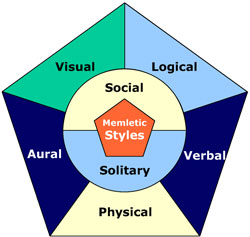
    Week#6 - Learning Styles


    Learning Styles

    Different Theories of Learning Styles Handout


    Videos Right Brain/Left Brain
    Myth: https://www.youtube.com/watch?v=yE6VTvxkhFs


    Ted Talk


    Multiple Intelligences

    David Kolb

    Myers-Brigg


    Learning Styles - Discussion Questions Part#1


    * In general terms, how would you describe your learning styles?
    * How much do you know about these different theories of learning styles?
    • Right Brain/Left Brain Dominant
    • Howard Gardner’s Multiple Intelligences (musical–rhythmic, visual–spatial, verbal–linguistic, logical–mathematical, bodily–kinesthetic, interpersonal, intrapersonal, naturalistic)
    • David Kolb’s  Accommodator, Converger, Diverger, Assimilator
    • Field Independent vs. Field Independent
    * To the extent that you do, how would you characterize your learning styles according to each theory?
    * How do your learning styles affect they way you study and learn? * In what ways have your educational experiences matched your learning styles or not?

    Learning Styles - Discussion Questions Part#2

    • Which theory of learning styles makes the most sense to you?
    • How much do you think a person actually has a particular learning style?
      (e.g. I’m a right brain learner, or I’m a visual, interpersonal learner)
    • How much do you think learning styles affect they way you learn and/or teach?
    • As a learner, how much does it matter which of these learning styles the teacher focuses on?
      Can you think of examples of teachers who targeted different learning styles in their teaching?
    • As a teacher, how important do you think it is to incorporate different learning styles into your teaching plans?


    Assignment:
    • On your blog, post a customized reflection (according to your learning styles) about our Week#6 materials and discussion about Learning Styles.
    • Next week, we will discuss topics related to chapters 6~7 (personality and sociocultural factors). It may be helpful to take a look at those chapters.

    Monday, September 21, 2015

    Week#4 - Motivation

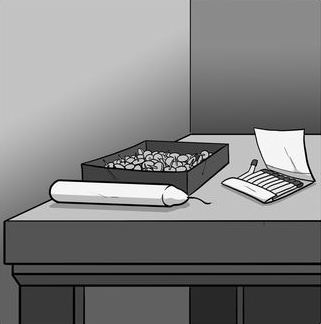
    The Candle Problem


    Adam Grant: Teacher Burnout


    Discussion Questions

    Motivation: the reason or reasons one has for acting or behaving in a particular way.
    • What motivates you to spend your time the way you do?
    • (to come here at 9am on a Tuesday morning,  to spend so much time and effort studying, to keep going to your job (if you have one),  to meet friends at a coffee shop, etc?)
    • What kinds of rewards or benefits do you receive for various activities?
    • Do you think of yourself as a ‘motivated person’. How so and/or why not?
    • Who is the most motivated person you know?  
    • Why are they so motivated and how do they direct their energies?
    • What do you think motivates most ‘good’ students to study hard?
    • Why do you think ‘poor’ students don’t study hard?
    • What generally motivates teachers?  How can they stay motivated and/or passionate as teachers?
    • How can they avoid ‘burnout’?


    • What things do you do for reasons of intrinsic motivation? What are the rewards?
      When do you feel like you are ‘doing your thing’?
    • What things do you do for reasons of extrinsic motivation? What are the rewards?
    • Compare how you feel when doing things for intrinsic vs. extrinsic reasons?
    • How much of your activity as a teacher/learner is guided by intrinsic vs extrinsic motivation?
    • How much are students’ activities guided by intrinsic vs extrinsic motivation?
    • What would a education system that embraces intrinsic motivation be like for teachers & students?
    • As a current/future educator, how can you avoid burnout?
    • Can one person really motivate another person?
    • How do you stay motivated after a ‘failure’ or setback?
    • Can the intrinsic motivation drive be extinguished?
    • When you’re on your deathbed, what do you want to be able to say about your life?

    Assignment:

    Monday, September 14, 2015

    Week#3 - First Language Acquisition


    Videos

    Baby imitation


    How Children Acquire and Produce Language

    Theories of language development: Nativist, learning, interactionist

    Behaviorism vs Constructivism

    How Babies Learn Language

    Patricia Kuhl: The linguistic genius of babies

    EBS Video: The Geography of Thought Part#1 Nouns & Verbs, Part#2 See & Be

    Resources
    Storybooks for Young Learners

    Colors in English


    Discussion Questions

    • What do you remember (if anything) about your early L1 learning experiences as a child?
    • What experiences have you had observing other young children learn L1 or L2? What observations have you made?
    • Can you think of situations when your comprehension exceeded your production ability (in L1 or L2)?


    • In your language learning environments how were comprehension and production balanced?


    • How do you think they should be balanced? What factors affect this?  (e.g. age, level, type of content)


    • Children tend to learn language through extensive imitation and playful repetition of language forms.  Can you think of any situations in which you did (or still do) this?


    • Do you 'think' differently when speaking in L1 vs. L2?  

    • Based on your experiences, how do you think Asians and Westerners think and communicate differently?
    • Were you reminded of any personal experiences when viewing the video and presentation?
    • Do you think these differences are increasing or decreasing over time?
    • How much do you see the world in a typically Asian way as described in the video?

    Assignment:
    On your blog, post a short reflection about Week#3 discussions.
    Also, please answer this question (on your blog):
    What materials, tools, and/or sites have been most useful to you as a language learner?
    Provide links if possible.


    Coming Up
    Flipped Classroom
    Salman Khan's Ted Talk about The Flipped Classroom and/or the KBS Flipped Classroom Documentary.

    SOLE
    The child-driven education

    Monday, September 7, 2015

    Week#2 - History of Language Learnig


    Presentations
    Videos


    Discussion Questions and selected passages from the book

    Assignment:
    •  Read pages 24~50
    • Create a blog post answering these questions
      ⇒Can you think of times when you learned language by the different historical approaches…
         - Grammar Translation Method?
         - Audiolingual?
         - Communicative Language Teaching?
      Which have you experienced the most?
      Give examples of activities that fit into the different methods. In what ways were they effective or not? How do you (will you) balance these approaches as a teacher?