Monday, November 2, 2015

Week#10 - Exploring 21st Methods & Online Resources


Sir Ken Robinson on Creativity


Assignment
  • Which sites and resources were of most/least interest as a language learner? Why? 
  • Which sites and resources might be useful as a teacher (now and in the future)?  Why?
  • Which other sites (not on LearningCall.net) have been useful to you as a learner or teacher? 
  • What did you enjoy (or not enjoy) about spending time in the computer lab vs. the classroom?

Monday, October 26, 2015

Week#9 Midterm Reflections and Preparing for the Future


Midterm Thoughts & Question

Kahoot Challenge
Google Translate Challenge (pronunciation practice)


Sugata Mitra - SOLE (Self Organized Learning Environment)

Quoting Arthur C Clarke
  • Any teacher that can be replaced by a machine should be!
  • If children have interests then education happens.

Resources


The Flipped Classrooma form of blended learning which encompasses any use of technology to leverage the learning in a classroom, so a teacher can spend more time interacting with students instead of lecturing. This is most commonly being done using teacher-created videos that students view outside of class time.

 Let's use Video to Reinvent Education

More about Khan Analytics (starts at 1:10)
http://www.thegatesnotes.com/Topics/Education/Sal-Khan-Analytics-Khan-Academy

거꾸로교실 플립러닝 Flipped Learning KBS
PD Journal: 아이들이 즐거워지는 혁명, ‘거꾸로 교실’

Interview with Salman Khan
http://fora.tv/2011/05/03/Khan_Academys_Salman_Khan_The_Real_YouTube_Revolution#chapter_07

About Flipped Classroom
http://www.peterli.com/spm/resources/articles/archive.php?article_id=2604

The Flipped Classroom Project
http://www.flatclassroomproject.org/

Teachers "Doing The Flip" To Help Students Become Learnershttp://www.thedailyriff.com/articles/teachers-doing-the-flip-to-help-students-become-learners-531.php


The World is Flat by Thomas Friedman The title is a metaphor for viewing the world as a level playing field in terms of commerce, where all competitors have an equal opportunity.
http://en.wikipedia.org/wiki/The_world_is_flat

    Transcript Here


    Food for Thought: Changing Education Paradigms

    Transcript
    Other cool RSA Animate Videos
      Language as a Window into Human Nature
       The Power of Networks

      The Divided Brain
    and from other sources
    Visionsofstudents.org
    Rethinking Education


    Discussion Questions

    • What are your first reactions to the ideas discussed in the videos.
    • How could Flipped Classroom and SOLE concepts be effective in your current or likely future teaching environments?
    • What would be the benefits, challenges, and obstacles (for teachers, students, and the system)?
    • How do you think the role of the teacher will change in coming years? How can you be prepared for the future?

    Assignments:
    • Check out some of the resources on on this post and share your thoughts and reflections on a your own blog.
    • Take a look at some of  the Skills Guide on LearningCall.net.  Arrive to next week's class with questions, interests, and fully-charged phone batteries.

    Monday, October 12, 2015

    Midterm


    Midterm

    Answer the questions below in a total of at least 600 words.
    Email answers to pufslebow@gmail.com and/or post them on your blog by October 23.
    • Of the topics we've covered so far, which ones will be most applicable to your future language learning and  teaching? Why?
       
    • Choose one aspect of something we've covered in this course and describe in some detail how you would apply that to a future lesson?
       
    • Which topics or methods are you interested in learning more about during the second half of the certificate program? 

    Week#7 - Affective Issues in ELT


    Affective Issues in L2 Learning in the Classroom

    Videos

    Jessica affirmation


    Student-Teacher Relationships as Motivators v1
    https://www.youtube.com/watch?v=0YyPd_KAdQY


    The surprising secret to speaking with confidence
    https://www.youtube.com/watch?v=a2MR5XbJtXU

    Discussion, Part#1

    • What was the most stressful class you’ve ever taken? Why?
    • What learning situations have caused you the most anxiety?
    • Think back to past teachers and courses.  Which ones helped you have a ‘I can do it!’ attitude?
      Which ones did the opposite?
    • What kinds of classroom activities cause you the most anxiety?  Which ones make you most comfortable?
    • How do you usually perform in class?  Up to your level?  Underperform?  Overperform?
    • How do you usually perform on tests?
    • How often do you say positive things about your English speaking abilities?
      Negative?
    • When are you most confident in life? most insecure?
    • Who is the most confident person you know?  Why do you think they are so confident?

    Discussion, Part#2

    • What forms of social persuasion (comments from others) have affected your self-efficacy?
    • Who has affected your self-efficacy positively or negatively?  How so?
    • What kind of anxiety have you felt as a teacher? when making presentations?
    • Do you feel like your confidence is growing or diminishing?
    • What things have teachers done over the years that raised or lowered your affective filter/classroom anxiety?
    • How would you rate you self-efficacy when it comes to communicating in English?
                                                                                             being a competent teacher?
    • When you are learning a language, how much error correction do you want?
    • How do you want to be corrected?
    • How much does the age of students make a difference in the style of error correction?
    • How would you encourage your students to have an ‘I can do it’ attitude?


    Monday, October 5, 2015

    Week#6 - Learning Styles


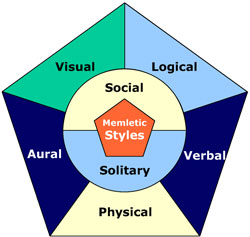
    Learning Styles

    Different Theories of Learning Styles Handout


    Videos Right Brain/Left Brain
    Myth: https://www.youtube.com/watch?v=yE6VTvxkhFs


    Ted Talk


    Multiple Intelligences

    David Kolb

    Myers-Brigg


    Learning Styles - Discussion Questions Part#1


    * In general terms, how would you describe your learning styles?
    * How much do you know about these different theories of learning styles?
    • Right Brain/Left Brain Dominant
    • Howard Gardner’s Multiple Intelligences (musical–rhythmic, visual–spatial, verbal–linguistic, logical–mathematical, bodily–kinesthetic, interpersonal, intrapersonal, naturalistic)
    • David Kolb’s  Accommodator, Converger, Diverger, Assimilator
    • Field Independent vs. Field Independent
    * To the extent that you do, how would you characterize your learning styles according to each theory?
    * How do your learning styles affect they way you study and learn? * In what ways have your educational experiences matched your learning styles or not?

    Learning Styles - Discussion Questions Part#2

    • Which theory of learning styles makes the most sense to you?
    • How much do you think a person actually has a particular learning style?
      (e.g. I’m a right brain learner, or I’m a visual, interpersonal learner)
    • How much do you think learning styles affect they way you learn and/or teach?
    • As a learner, how much does it matter which of these learning styles the teacher focuses on?
      Can you think of examples of teachers who targeted different learning styles in their teaching?
    • As a teacher, how important do you think it is to incorporate different learning styles into your teaching plans?


    Assignment:
    • On your blog, post a customized reflection (according to your learning styles) about our Week#6 materials and discussion about Learning Styles.
    • Next week, we will discuss topics related to chapters 6~7 (personality and sociocultural factors). It may be helpful to take a look at those chapters.

    Monday, September 21, 2015

    Week#4 - Motivation

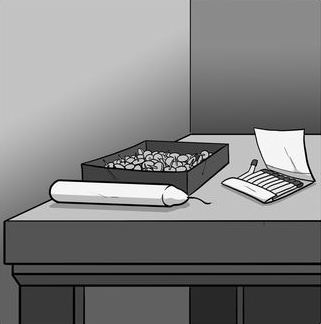
    The Candle Problem


    Adam Grant: Teacher Burnout


    Discussion Questions

    Motivation: the reason or reasons one has for acting or behaving in a particular way.
    • What motivates you to spend your time the way you do?
    • (to come here at 9am on a Tuesday morning,  to spend so much time and effort studying, to keep going to your job (if you have one),  to meet friends at a coffee shop, etc?)
    • What kinds of rewards or benefits do you receive for various activities?
    • Do you think of yourself as a ‘motivated person’. How so and/or why not?
    • Who is the most motivated person you know?  
    • Why are they so motivated and how do they direct their energies?
    • What do you think motivates most ‘good’ students to study hard?
    • Why do you think ‘poor’ students don’t study hard?
    • What generally motivates teachers?  How can they stay motivated and/or passionate as teachers?
    • How can they avoid ‘burnout’?


    • What things do you do for reasons of intrinsic motivation? What are the rewards?
      When do you feel like you are ‘doing your thing’?
    • What things do you do for reasons of extrinsic motivation? What are the rewards?
    • Compare how you feel when doing things for intrinsic vs. extrinsic reasons?
    • How much of your activity as a teacher/learner is guided by intrinsic vs extrinsic motivation?
    • How much are students’ activities guided by intrinsic vs extrinsic motivation?
    • What would a education system that embraces intrinsic motivation be like for teachers & students?
    • As a current/future educator, how can you avoid burnout?
    • Can one person really motivate another person?
    • How do you stay motivated after a ‘failure’ or setback?
    • Can the intrinsic motivation drive be extinguished?
    • When you’re on your deathbed, what do you want to be able to say about your life?

    Assignment:

    Monday, September 14, 2015

    Week#3 - First Language Acquisition


    Videos

    Baby imitation


    How Children Acquire and Produce Language

    Theories of language development: Nativist, learning, interactionist

    Behaviorism vs Constructivism

    How Babies Learn Language

    Patricia Kuhl: The linguistic genius of babies

    EBS Video: The Geography of Thought Part#1 Nouns & Verbs, Part#2 See & Be

    Resources
    Storybooks for Young Learners

    Colors in English


    Discussion Questions

    • What do you remember (if anything) about your early L1 learning experiences as a child?
    • What experiences have you had observing other young children learn L1 or L2? What observations have you made?
    • Can you think of situations when your comprehension exceeded your production ability (in L1 or L2)?


    • In your language learning environments how were comprehension and production balanced?


    • How do you think they should be balanced? What factors affect this?  (e.g. age, level, type of content)


    • Children tend to learn language through extensive imitation and playful repetition of language forms.  Can you think of any situations in which you did (or still do) this?


    • Do you 'think' differently when speaking in L1 vs. L2?  

    • Based on your experiences, how do you think Asians and Westerners think and communicate differently?
    • Were you reminded of any personal experiences when viewing the video and presentation?
    • Do you think these differences are increasing or decreasing over time?
    • How much do you see the world in a typically Asian way as described in the video?

    Assignment:
    On your blog, post a short reflection about Week#3 discussions.
    Also, please answer this question (on your blog):
    What materials, tools, and/or sites have been most useful to you as a language learner?
    Provide links if possible.


    Coming Up
    Flipped Classroom
    Salman Khan's Ted Talk about The Flipped Classroom and/or the KBS Flipped Classroom Documentary.

    SOLE
    The child-driven education